

(Affiliate disclosure: I may receive a commission if you purchase something through links in this post. As an Amazon Associate I earn from qualifying puchases. See more details here:)
When I first started keeping backyard chickens I knew I would need to find some sort of option for keeping their water from freezing in the winter months. Where I live in Massachusetts it gets cold enough that their water would freeze fairly regularly in the winter time, and I knew that I didn't want to have to keep dealing with frozen water all the time.
There are several different options for heated waterers, but instead of using one designed for chickens I ended up getting a heated dog water bowl for my chickens to use instead. I've used that for a few of years now, and now that I've had some experience with it for three previous winters, I'm going to share a few pros and cons that I've found with using a heated dog bowl for my chickens' water.
I know that there are some DIY ways that I've heard that people use to try to keep water from freezing as fast, but I figured it would be easier to just get a heated waterer and not have to constantly worry about whether or not the water would be frozen. I like the fact that when the chickens get up in the morning I know that they will have access to water and I don't have to deal with a frozen waterer, especially in the middle of a snow storm!
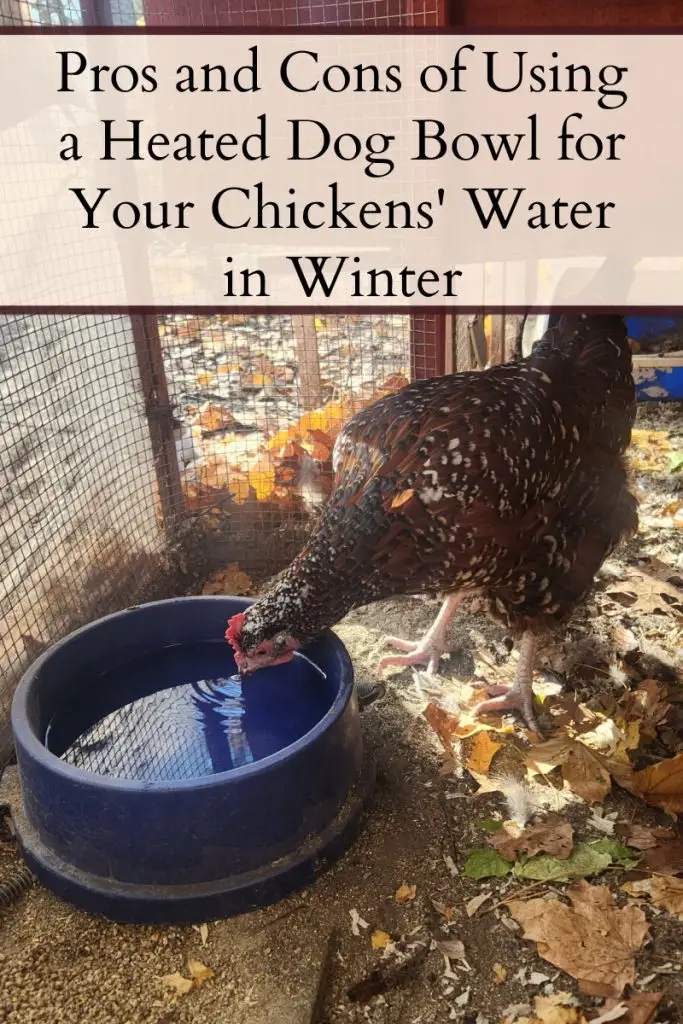
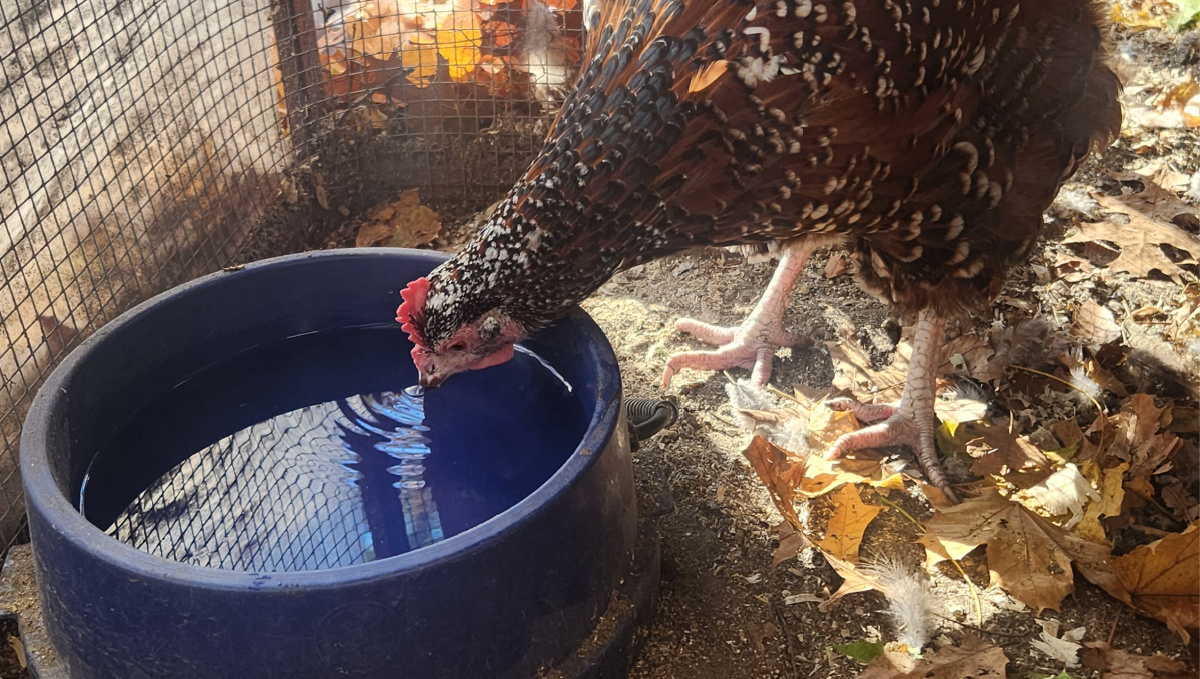
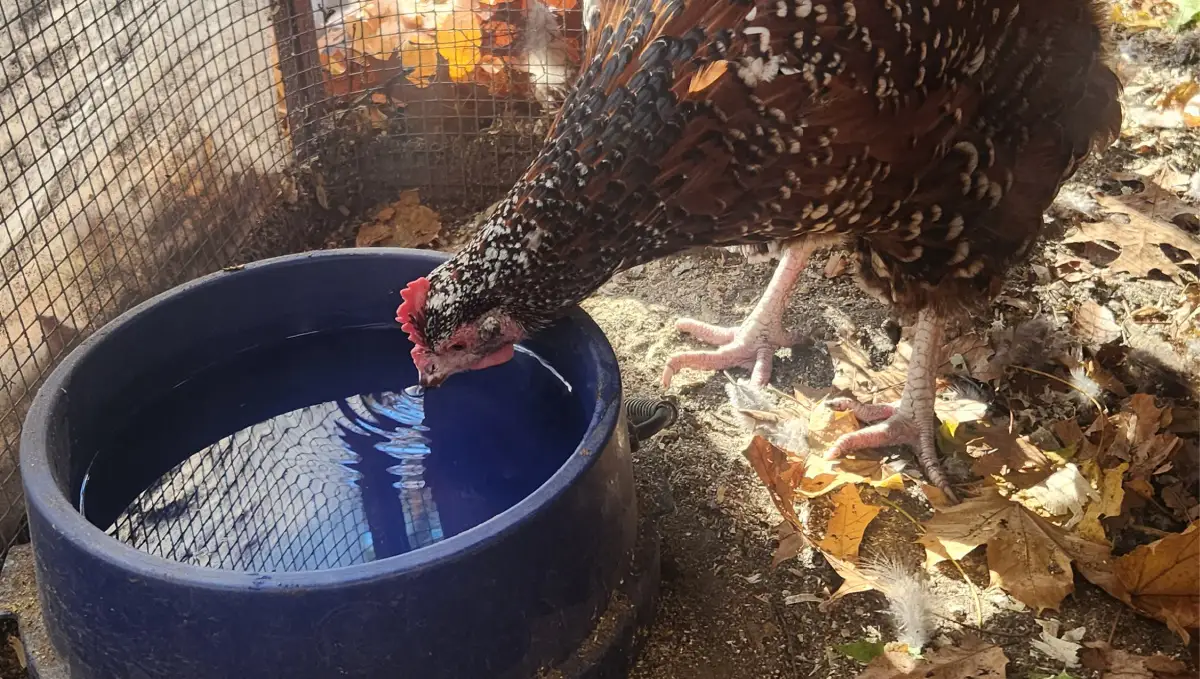
This bowl is the kind of heated dog bowl that I've been using for my chickens' water in the winter time. You can also find the same bowl at Chewy if you shop there for other pet products. I'm sure there are other styles of heated bowl available, but this particular one is the one that I've been using for the last few years. In the picture above you can see my hen, Eliza, drinking from the heated water bowl.
Pros of Using a Heated Dog Bowl for Your Chickens
They Keep the Water Thawed Reliably
I've used a heated dog bowl for my chicken's water for the past few years now, and this coming winter will be my fourth year using it. I haven't had any issues with the water freezing at all. For reference, I live in Massachusetts and where I live it gets below freezing at night fairly often during the winter time and sometimes during the day, too. It doesn't usually go below zero very often, though. We did have a night a couple of years ago where the temperature dropped down to around -10 degrees, and the waterer worked fine to keep the water from freezing at that temperature.
And for reference, I have the water bowl inside of the chicken run where it is covered from the top with a wooden roof and covered with some plastic on the side, so it is slightly sheltered from the elements. If the bowl were out in the open and exposed more to snow and wind then that might make a difference.
They Are Less Expensive than Some Heated Waterers Designed Specifically for Chickens
There are lots of different types of water heaters that you can find when you start shopping around for them, and there is a variety of different price points for those, too. The heated dog bowl that I've been using was cheaper than some of the heated waterers I saw that were specifically designed for chickens, so one of the advantages to using a heated dog bowl instead of a waterer meant for chickens is that the price can be lower.
They Are Easy to Fill
I find this style of waterer to be pretty easy to fill up in the wintertime because you can just pour water into it rather than having to unscrew the top from the base like with some other styles of waterers. The waterer that I use for my chickens in the summer is one where you unscrew the top, fill the basin up with water, and then screw the base back onto it, and it works ok for the summer, but I think it would probably be a bit more of a challenge for me to try to do that in the winter when everything is freezing cold and I'm wearing thick gloves. So I personally feel like it makes it easy for me to just pour water into a bowl during the winter season. I usually bring a pitcher of water out from the house with me when I'm going out to take care of the chickens to use for filling their bowl.
Cons of Using a Heated Dog Bowl for Your Chickens
They Might Need To Be Refilled More Often If You Have a Large Flock
For my small flock of backyard chickens this type of heated dog bowl is plenty big enough for them. I've been using it with four chickens, and I've never had issues with the water running out, so I think it would be fine for a small flock that size or maybe even a bit larger. If you have a big flock, though, or if you need something large enough that you don't need to check their water every day then you might want to find a bigger option.
They Can Get Dirtier Than Other Types of Waterers
Some of my chickens have a habit of trying to perch on the edge of the bowl or even stepping into the bowl, so if their feet are dirty then some dirt can get into the water. (And if one of them steps right in the spot where another chicken just went to the bathroom and then perches on the water bowl that could create an even messier situation.) They also sometimes kick things into it if they are scratching at the ground in the run near the waterer. And if you were to leave the bowl out in an exposed area rather than in a covered run you might find leaves blowing into it, too.
I usually just change out the water every day because of the dirt and crumbs of chicken feed that get in it. I just dump the dirty water out and then give the bowl a quick wipe with a paper towel, but you could use a rag or even a handful of leaves, too, if you didn't want to use paper towels. (Paper towels are good to have on hand, though, for once in a while if a chicken steps in poop and then perches on the bowl because then it's easier to clean that up.) And then after wiping out the bowl I refill it with fresh water. Since the outside hose is turned off during the winter, I bring a picture of water outside with me for refilling.
I haven't found the messiness of the bowl to be enough of a con for me to feel like the heated dog bowl is too inconvenient. Most days there's just a bit of dirt on the bottom that's easy to wipe out or rinse out with water from the pitcher, and it's only once in a while that my chickens make more of a mess of the bowl. Each flock is different, though, so that's something to keep in mind. And if you have more chickens and needed to use several bowls instead of just one or if you needed to be able to leave a waterer unattended for a couple of days at a time then a heated dog bowl might not be the best option for you.
My Overall Opinion
Overall, I feel like this style of heated water bowl is a good option if you want something simple and less expensive that will keep water from freezing for a small flock of backyard chickens and if you are able to check on their water and change it either daily or every other day. If you need something that you can fill up and leave for a longer period of time or if you don't want to deal with the messiness of having to clean out the bowl regularly then this might not be the best type of waterer for you.
I haven't found the extra maintenance to be too big of an inconvenience, and it's just part of my routine with chicken care in the colder months. And I think that it's still a lot easier than having to continually break up ice in a non-heated waterer and keep refilling with fresh water when the temperature drops below freezing. So for me this was a good option and one that has worked well for my current chicken coop setup.



(Lori Elliott is a participant in the Amazon Services LLC Associates Program, an affiliate advertising program designed to provide a means for us to earn fees by linking to Amazon.com and affiliated sites.)
The information in this post is not to be taken as medical advice and is not intended to diagnose or treat any disease.