

(Affiliate disclosure: I may receive a commission if you purchase something through links in this post. As an Amazon Associate I earn from qualifying puchases. See more details here:)

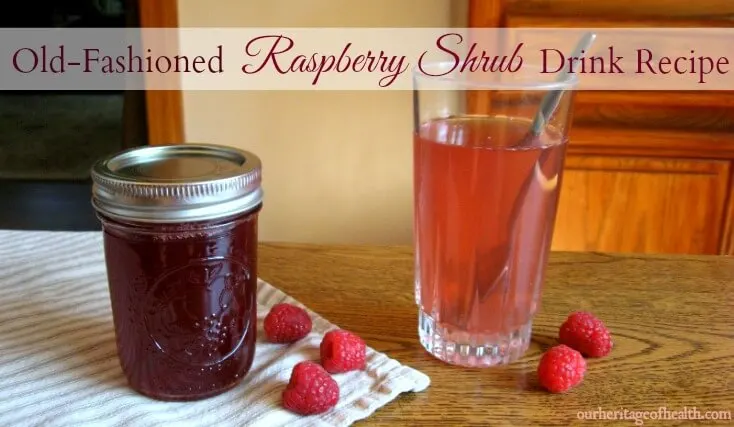
Before modern sodas and bottled juices became so commonplace, drinks like raspberry shrub were popular beverages because they were a way to enjoy a flavored drink and also to preserve the summer harvest of fruits like raspberries.
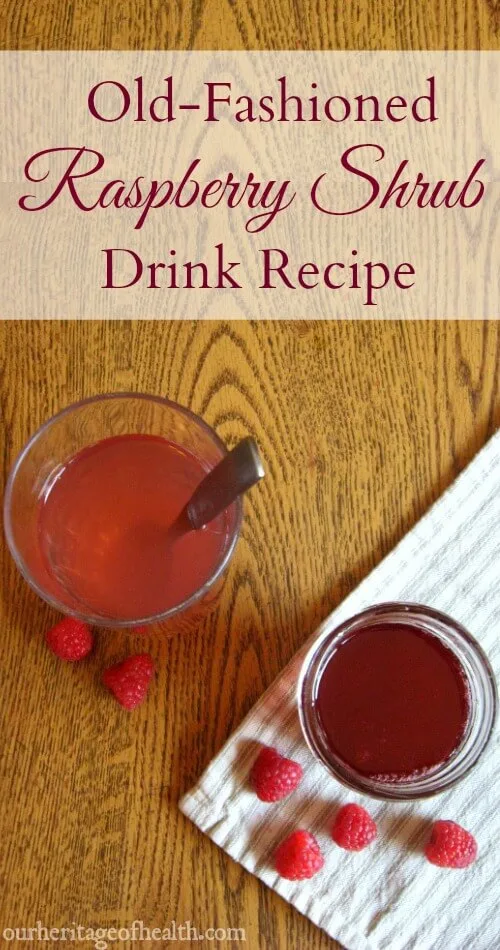
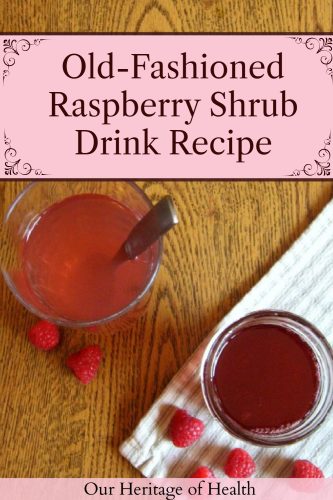
This raspberry shrub drink recipe comes from a popular 19th century cookbook, and to make this drink, you start by making a syrup with fresh raspberries, vinegar, and sugar, and then you add as much or as little of the syrup as you like to a glass of water, so you can customize how strong you want it to be. The flavor is a blend of tangy and sweet, and it tastes just like summertime.
An Old-Fashioned Recipe
I found this recipe in the Old Sturbridge Village Cookbook - a cookbook created by my favorite living history museum, and it's a really interesting cookbook for any one who loves history because it's full of traditional early 19th century recipes.
The original recipe comes from 1832 from Lydia Marie Child's book The American Frugal Housewife - one of the most popular cookbooks and household management books of the 19th century:
"Raspberry shrub mixed with water is a pure, delicious drink for summer, and in a country where raspberries are abundant, it is good economy to make it answer instead of Port and Catalonia wine. Put raspberries in a pan, and scarcely cover them with strong vinegar. Add a pint of sugar to a pint of juice (of this you can judge by first trying your pan to see how much it holds); scald it, skim it, and bottle it when cold"
I had seen other raspberry shrub recipes in other old antique cookbooks before, but the most helpful part about seeing this old recipe in the Old Sturbridge Village Cookbook is that this recipe mentioned adding the finished syrup to water for drinking. That small but very important detail is one that was left out of other cookbooks I had seen, most likely because it was just assumed that the reader would know how to use the shrub syrup once it was prepared.
Well, the first time I tried making raspberry shrub I was NOT aware of this very important fact and I tried drinking the syrup straight without mixing it into water, and it had an overwhelmingly strong flavor that was not at pleasant at all. I much prefer the syrup when it's diluted in water, and the nice thing about a concentrated syrup like this is that you can adjust the strength of the flavor according to your taste.
Here my version of this recipe based on the original version and the adaptation in the Old Sturbridge Village Cookbook.
Raspberry Shrub Drink Recipe
Ingredients:
- 1 ½ cups fresh raspberries
- ½ cup apple cider vinegar (I like this kind or this kind)
- ¾ cup cane sugar
Notes:
- These ingredients will give you about one 8 ounce Mason jar full of syrup.
- If you don't have apple cider vinegar on hand you could probably use white vinegar, too. I've haven't tried making it with white vinegar, but I don't think there would be a substantial difference in flavor because the main flavor is raspberry with the sweet and sour tang of the vinegar and sugar together.
Directions:
- Put the raspberries in a small saucepan and pour the vinegar over them.
- Simmer the raspberries and the vinegar over medium heat for about 10 minutes or so until the berries are soft.
- Strain the mixture through a sieve so that you separate out the seeds and pulp from the liquid.
- Measure the amount of liquid that's left after you finished straining and add an equal amount of sugar. (I got about ¾ cup of liquid when I made this recipe, so I used ¾ cup sugar.)
- Stir the sugar into the liquid and bring the mixture to a boil. Once it reaches a boil, remove it from the heat and skim off the foam floating on the top.
- Let the syrup cool and pour it into a Mason jar. This recipe makes enough syrup to fill one half pint-sized Mason jar.
To use the syrup, add spoonfuls of the syrup to a glass of water and stir to blend well. You can vary the amount of syrup you add depending on whether you want a mild or a stronger raspberry flavor. For me, four large spoonfuls was a good amount for a full glass of water, but you might want to start with just one or two spoonfuls, taste it, and then add more until tastes the way you like.
To store the syrup, you can either keep it in the fridge for a couple of weeks, or, for longer-term storage, you could store this in the freezer if you are using a freezer-safe Mason jar. I have not tried canning this recipe, so I can't say from personal experience whether it would work for canning.
(Lori Elliott is a participant in the Amazon Services LLC Associates Program, an affiliate advertising program designed to provide a means for us to earn fees by linking to Amazon.com and affiliated sites.)
The information in this post is not to be taken as medical advice and is not intended to diagnose or treat any disease.
Deb
Thursday 25th of July 2019
I remember this from my childhood. I made it - and it jelled. I'm sure it will still work, but it might require a bit more stirring! (It's delicious!)
Lori Elliott
Thursday 25th of July 2019
I've never had mine jell before, but I would think it would still dissolve into the water with a little bit of extra stirring like you mentioned. And, yes, very delicious! :)
Michelle Danielson
Saturday 26th of August 2017
I love this!! And I really enjoyed the video as well.... :) Thank you Lori!
ourheritageofhealth
Sunday 27th of August 2017
I'm so glad to hear that you enjoyed it! :)